
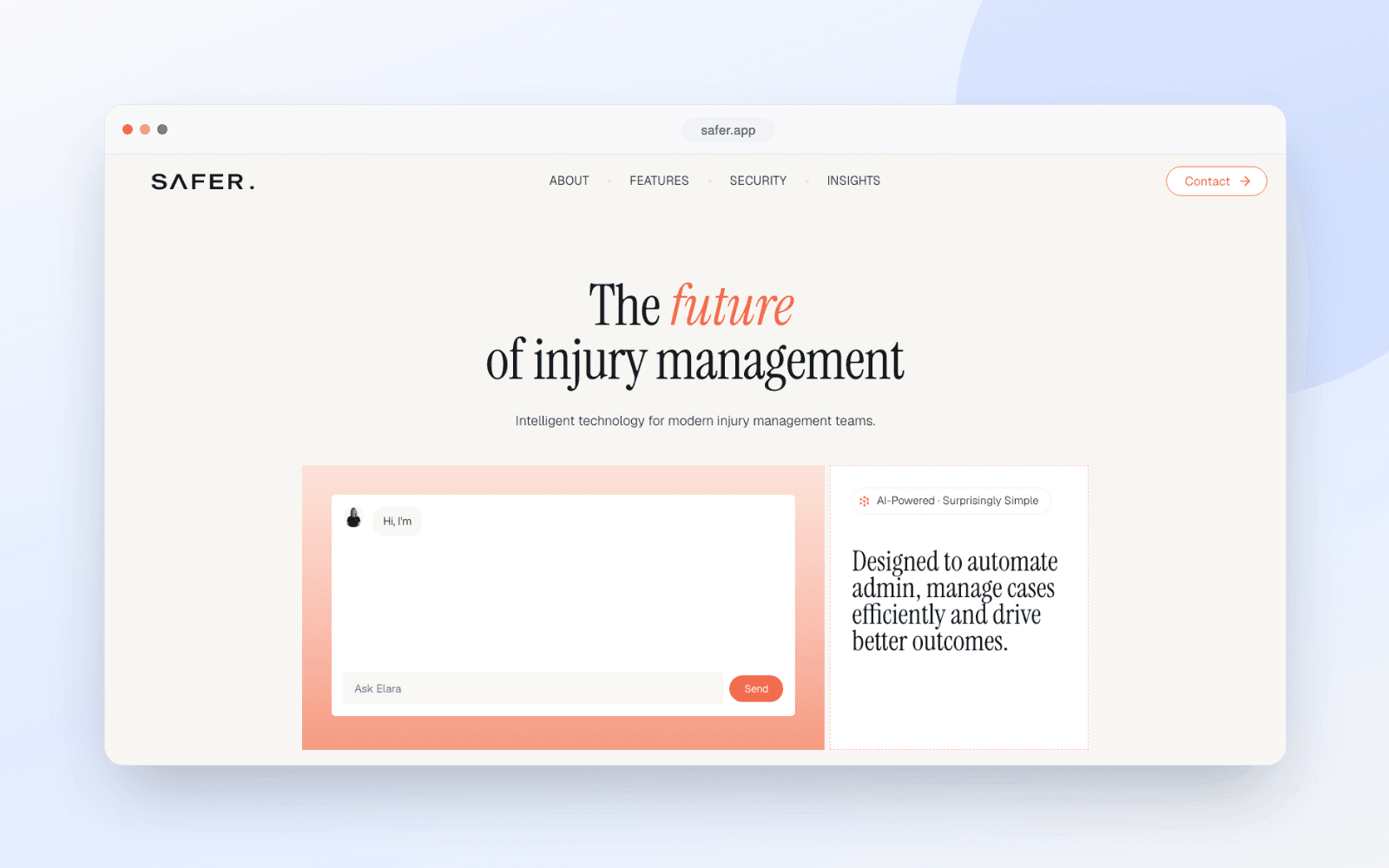
InsurTech
Safer
Migrated client case data into Safer, an AI-powered injury management platform for Australian teams, and built out its Rehab and Injury product areas.
product areas shipped: Rehab and Injury
- Next.js
- Data migration
- Product engineering
The full build, owned by someone inside your team rather than delivered to it. A product goes from a blank repository to something carrying real traffic, and the engineer who built it stays accountable for how it behaves under load — not until feature-complete, until it is genuinely yours to run.
If more than one of these is true, this is usually the right starting point.
One engineer, deployed from week one. Larger builds run two.
The sequence this work follows, and why it is in that order.
Access, codebase, constraints — and one small change shipped to production, because the first thing worth knowing is whether that path works at all. Everything we learn is written down and yours regardless of what happens next.
The thinnest possible slice — one real request path, deployed on the real infrastructure, with CI and observability already attached. Everything after this is filling it in.
Feature by feature, each one shippable on its own. No integration phase at the end, because an integration phase is where estimates go to die.
Runbooks and decision records are written as the decisions are made. A handover document assembled in the final week is archaeology, not documentation.
Chosen per deployment, not per fashion. If your team already runs something that works, we work in that instead.
Most deployments draw on more than one of these.
Talk to an engineer who has done this before — and if this is the wrong place to start, they will say so.